



Why Kalymnos Belongs on Every Serious Food Lover’s Map
Greece has no shortage of islands that claim exceptional food. Most of them are partially right. Kalymnos is different — not because it markets itself aggressively as a culinary destination, but precisely because it does not. The food here exists for the people who live here, and visitors who find their way to the right tables eat accordingly.
The Dodecanese island of Kalymnos sits roughly midway between Kos and Leros, a geographic position that places it in some of the most productive fishing waters in the Aegean. Its economy was built on sponge diving, its culture shaped by the sea, and its cuisine formed by necessity, abundance, and generations of women who cooked for men who returned from the water hungry and in need of something real. The result is a food culture that is simultaneously humble and extraordinary — unpretentious in presentation, uncompromising in quality.
This guide is for food lovers who want to eat in Kalymnos the way locals eat: understanding what to order, where to sit, what the dishes actually are, and why certain establishments have earned their reputations honestly.
The Architecture of a Kalymnian Seafood Meal
Before addressing specific restaurants and dishes, it helps to understand how a proper Kalymnian meal is structured. This is not a cuisine of courses in the European sense. It is a cuisine of accumulation — small plates arriving continuously, building toward a shared table experience that is fundamentally communal.
A meal typically begins with mezedes: small portions of marinated fish, taramosalata made from local fish roe, pickled vegetables, and fresh bread. This is followed by fried or grilled preparations of whatever small fish came in that morning. The centrepiece — octopus, a whole grilled fish, lobster, or swordfish steaks — arrives without much ceremony and is shared directly from the serving dish.
Wine or tsipouro runs throughout. The pace is unhurried. Nobody rushes you. The table is yours for the evening, and the kitchen will keep sending food as long as you keep ordering. Understanding this rhythm is essential — rushing a Kalymnian seafood meal is a category error.
The Dishes That Define the Island
Grilled Octopus (Χταπόδι Σχάρας) The defining dish of Kalymnos. Octopus caught locally, beaten by hand against the rocks, dried in the sun for hours, then grilled slowly over charcoal until the exterior caramelizes and the interior becomes yielding and tender. The flavor is smoky, mineral, and deeply oceanic. Drizzled with local olive oil and a splash of red wine vinegar, it is served as both appetizer and main course depending on quantity. No visit to Kalymnos is complete without ordering this at least once — ideally more.
Kakavia (Ψαρόσουπα/Κακαβιά) Kakavia is the fisherman’s soup — the original bouillabaisse, predating its French counterpart by centuries. Made from whatever fish were too small or too damaged to sell, cooked in seawater with olive oil, onion, and potato, it is a dish of extraordinary depth despite its simplicity. In Kalymnos, a good kakavia is made with genuine conviction: multiple species of fish, a broth that tastes of the entire Aegean, finished with lemon juice at the table. It warms you from somewhere very deep.
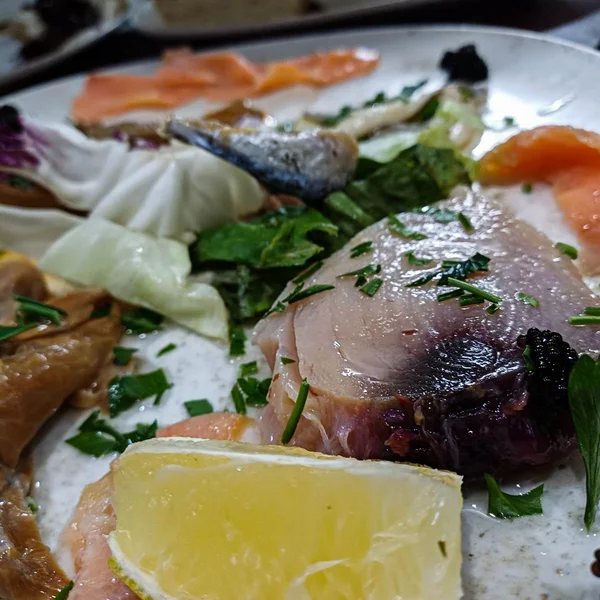
Marinated Anchovies (Γαύρος Μαρινάτος) Fresh anchovies cured in vinegar and olive oil with garlic and parsley. The local version uses anchovies pulled from Aegean waters with measurably higher fat content than Atlantic varieties. The result is a meze that is simultaneously sharp and rich, perfect alongside tsipouro and conversation.
Stuffed Squid (Καλαμαράκια Γεμιστά) Whole squid bodies filled with rice, herbs, pine nuts, and occasionally raisins, then baked slowly in tomato sauce. This is a dish that requires patience and skill — the filling must cook through without toughening the squid exterior. When properly executed, the squid becomes almost silky, and the filling absorbs the brine from the seafood and the sweetness of the tomato simultaneously.
Sea Bream (Τσιπούρα) and Sea Bass (Λαβράκι) Grilled whole over wood or charcoal, scaled but otherwise left intact, served with lemon, olive oil, and capers. The quality of locally caught versus farmed versions of these species is immediately perceptible. Wild sea bream from the Kalymnos waters has firmer flesh, more pronounced flavor, and a fat distribution that makes it almost self-basting on the grill.
Swordfish Skewers (Ξιφίας Σουβλάκι) Cubes of fresh swordfish threaded on skewers with bay leaves and grilled quickly over high heat. A preparation that showcases the texture of genuinely fresh swordfish — firm, meaty, with a slight crust on the exterior and a clean, almost nutty flavor inside.
Traditional Recipes: The Logic Behind the Food
Kalymnian seafood recipes share a consistent underlying philosophy: use as few ingredients as possible, and make each one count. Olive oil is never background — it is structural. Lemon is used for balance, not decoration. Garlic and herbs are restrained rather than aggressive, supporting the seafood rather than competing with it.
The kakavia method illustrates this well. Begin with the largest bones and heads in cold water. Bring slowly to a simmer, never a boil. Add whole onion, potato, carrot. The fish flesh goes in last — whole small fish, placed carefully — and cooks for no more than fifteen minutes. The moment the fish is done, the soup is done. Overcooking is the only real error.
For octopus, the most important step is the one before cooking: proper tenderizing and adequate drying. A well-dried octopus does not need marinating, seasoning, or sauce. The grill does the work. Patience is the technique.
Marinated anchovies require good fish and good acid in correct proportion. The vinegar should not dominate — it should transform. Left for four to six hours in a mixture of white wine vinegar and olive oil with thinly sliced garlic, the anchovies cure to a texture that is firm but not tough, sour but not aggressive.
Nautika Valsamidis: The Standard-Bearer
Any serious guide to eating in Kalymnos arrives, eventually, at Nautika Valsamidis. It is not a discovery — locals have known it for years — but for visitors navigating an unfamiliar island, it represents the clearest expression of what Kalymnian seafood dining should be.
The restaurant operates with a discipline that is easy to overlook because it is presented without theater. The fish is sourced directly from local fishermen through relationships built over time, not through a supplier catalog. The menu changes based on availability because availability changes daily based on what the sea provides. A fixed menu in a serious Kalymnian seafood restaurant would be a contradiction in terms.
What Nautika Valsamidis does particularly well is maintain consistency across the full range of the meal — from the mezedes that open proceedings to the grilled fish that forms the centerpiece. The octopus is prepared with full adherence to the traditional method. The kakavia, when available, is made with multiple species and served with the confidence of a dish that has been refined over many iterations. The swordfish, in season, is handled simply and correctly.
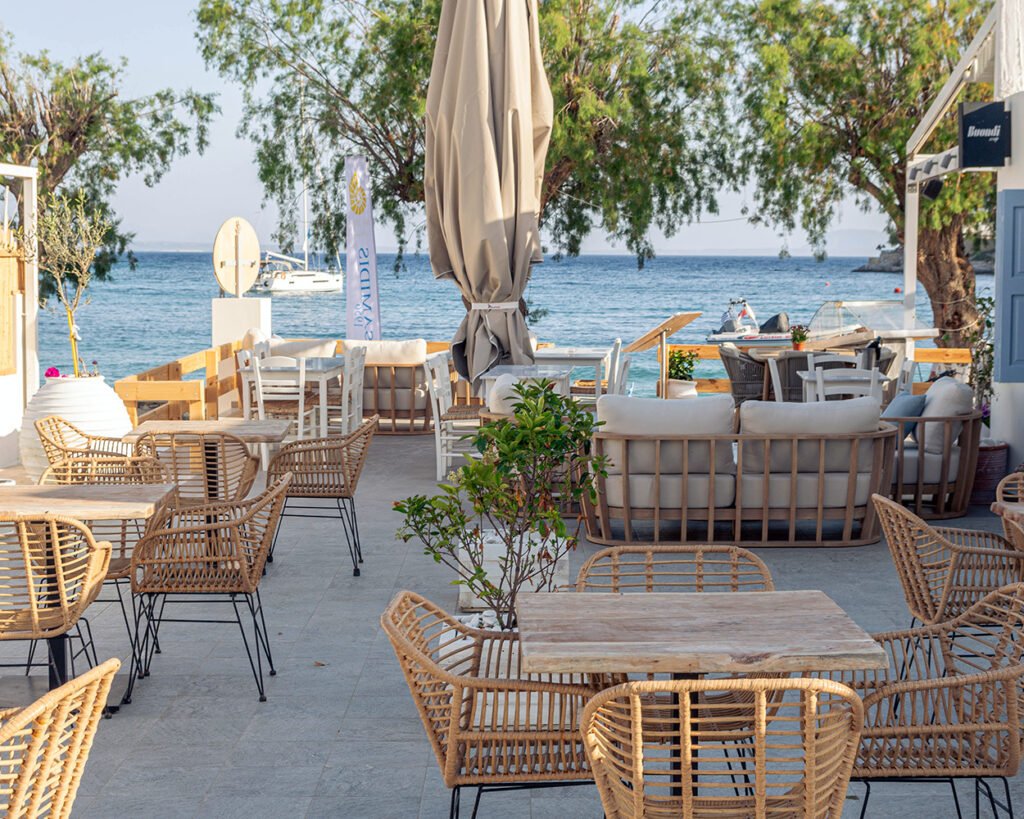
The setting contributes to the experience without overwhelming it. Positioned at the water, the restaurant offers the proximity to the sea that Kalymnian food culture demands — you should be able to smell the Aegean while you eat the Aegean. Nautika Valsamidis provides that without turning it into a performance.
For food lovers visiting the island for the first time, a meal here functions as calibration — it establishes what the standard actually is, making everything else on the island legible in relation to it.
Hidden Gems: Where Locals Actually Eat
The tavernas that locals frequent share certain characteristics: they are rarely on the main tourist circuit, they have menus that change daily or not at all, and they are run by families who have been cooking the same way for decades.
Look for small establishments in the back streets of Pothia, the island’s capital, particularly near the fishing port where boats return in the morning. A plastic chair and a handwritten menu board are encouraging signs, not deterrents. Ask what came in that day. If the answer is specific and immediate, sit down.
The village of Myrties on the western coast and the quieter settlements around Vathys, the deep fjord-like inlet on the island’s eastern side, both harbor tavernas that serve exceptional food to almost exclusively local clientele. Vathys in particular — surrounded by citrus groves that descend to the water — has a dreamlike quality and tavernas where the catch is bought from the boats that dock a few meters from the kitchen door.
FAQ
What is the single most important dish to order in Kalymnos? Grilled octopus, prepared the traditional Kalymnian way — beaten, sun-dried, and charcoal-grilled. It is the dish most directly connected to the island’s identity and the one where the quality gap between Kalymnos and everywhere else is most pronounced.
Is kakavia available year-round? Most serious tavernas offer some version of fish soup year-round, but the best kakavia is made when small mixed fish are most abundant — spring and early autumn tend to produce the fullest versions. Ask whether it is made fresh that day or prepared in advance.
How do I distinguish a genuinely good taverna from a tourist trap? Three reliable indicators: the menu changes daily or is communicated verbally rather than printed on laminated cards; the staff can tell you specifically what came in that morning; and the restaurant is busy with Greek-speaking customers. None of these guarantees perfection, but all three together are a strong signal.
Does Nautika Valsamidis cater to dietary restrictions? As with most traditional Greek seafood restaurants, the kitchen accommodates simple requests. Grilled fish with olive oil and lemon is naturally gluten-free. Vegetarian options are limited in a seafood-focused kitchen, but mezedes including salads and vegetable dishes are usually available.
Are prices at Kalymnos tavernas generally reasonable? By comparison to Mykonos, Santorini, or Rhodes, yes — noticeably so. Lobster and certain seasonal specialties command premium pricing as they do everywhere, but the core of the Kalymnian seafood menu — grilled fish, octopus, fried mixed fish, soups — is priced accessibly, particularly at tavernas off the main tourist routes.
What should I drink with Kalymnian seafood? Tsipouro without anise alongside mezedes is the local standard. For a full meal, cold dry white wine — assyrtiko from Santorini or local Aegean whites — pairs well with everything on the table. Ouzo is traditional with octopus specifically and is consumed slowly, with water, not rushed.
Is it worth visiting Kalymnos specifically for the food? Yes — particularly if combined with the island’s other qualities: dramatic limestone landscape, genuine working-port atmosphere, proximity to smaller uninhabited islands, and a pace of life that the more famous Greek islands have largely lost. The food is exceptional enough to justify the journey on its own terms, but Kalymnos delivers considerably more than that.
The best meal you will eat in Kalymnos will probably happen at a table with no view, no ambiance, and a menu that didn’t exist yesterday. That is the point.