


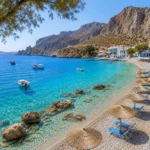

Kalymnos has earned its reputation as one of the premier rock climbing destinations on the planet, drawing thousands of climbers from Europe, North America, and beyond every single year. With its dramatic limestone cliffs rising directly from the turquoise waters of the Aegean, the island offers a climbing experience that combines world-class routes with genuine Greek island hospitality. Whether you’re a seasoned sport climber chasing your next grade or a curious beginner looking to try something new, Kalymnos delivers.
Why Kalymnos Became a Climbing Mecca
The transformation began in the early 2000s when Italian climbers discovered the island’s compact, sculpted limestone — a rock type famous for its tufas, stalactites, and pockets that create striking, photogenic routes. Unlike many climbing destinations that require long approaches through remote terrain, Kalymnos crags are often just a short walk or scooter ride from the town of Massouri, making the island remarkably accessible for climbers of all fitness levels.
Today, the island hosts more than 3,400 bolted routes spread across roughly 100 sectors, with new lines still being developed each season by local and visiting climbers alike.
Best Sectors for Every Level
Beginners and intermediate climbers should head to sectors like Odyssey, Poets, and Ghost Kitchen, where routes in the 5a–6b range offer forgiving, well-protected climbing on solid rock.
Advanced and expert climbers flock to the legendary Grande Grotta, a massive cave sector where routes weave through stalactites and overhangs, some pushing into the 8c and 9a range. Sikati Cave and the Cave sector are similarly demanding, requiring strength and technical precision.
Multi-pitch enthusiasts shouldn’t miss the routes on the Spartan Wall or the classic lines near Arginonta, which combine sustained climbing with panoramic Aegean views.
When to Climb
The prime climbing season runs from late September through May, avoiding the intense summer heat. Spring (March–May) and autumn (late September–November) offer the most comfortable temperatures, with cooler mornings ideal for tackling the steeper, more strenuous sectors. Many climbers plan their trips around the Kalymnos Climbing Festival, typically held in October, which brings clinics, competitions, and a lively community atmosphere to Massouri.
Where to Stay and What to Bring
Massouri and neighboring Armeos have become the unofficial climbing villages of the island, packed with climber-friendly guesthouses, gear shops, and tavernas that stay open late for post-climb refueling. Most accommodations offer flexible bookings and are within walking distance of dozens of sectors.
Essential gear includes a 70m rope (many routes require full rope length), 14–16 quickdraws, and a helmet for the cave sectors where loose rock can occasionally be an issue. Local gear shops in Massouri rent and sell equipment if you’re traveling light.
Beyond the Rock
After a day on the cliffs, climbers can cool off at Melitsahas Bay, explore the neighboring islet of Telendos by boat, or simply relax at a beachfront restaurant. The climbing community on Kalymnos is famously social, and it’s common to swap route beta over dinner with climbers from a dozen different countries.
Frequently Asked Questions
Is Kalymnos suitable for beginner climbers?
Yes. While the island is known for its hard routes, there are hundreds of well-bolted, moderate routes suitable for newcomers, and several local guiding companies offer lessons and guided climbs.
Do I need to bring my own gear?
You can, but it’s not required — several shops in Massouri rent full climbing kits, including ropes, harnesses, and shoes.
What’s the best time of year to visit for climbing?
Late September to May, with spring and autumn offering the most pleasant temperatures for climbing.
Is Kalymnos climbing suitable for families?
Yes — several easy, low-commitment sectors near town are family-friendly, and many guesthouses cater specifically to climbing families.